The words “Todays or Today’s” can be confusing when you write in English. Both look similar, but only one is correct for showing possession. Many people forget the apostrophe when typing quickly. Others are unsure when to use it in a sentence. Understanding the difference is simple. You just need to learn what each form means and how to use it correctly.
In this guide, we will explain Todays or Today’s in simple English. You will learn why “today’s” is the correct form in most cases. We will also share easy examples to help you understand its use. If you want to improve your writing, this small grammar rule can make a big difference. By the end, you will know when to use Todays or Today’s with confidence.
Todays or Today’s– Quick Answer
Use today’s whenever you mean “of today” or “belonging to today.” That covers today’s meeting, today’s weather, and today’s news.
The apostrophe isn’t decoration. It marks ownership and association, the same way it does in “Sarah’s laptop.”
If you want one line to remember, here it is. Write today’s and you’re right about 99 percent of the time.
What Is “Today”?
Today is a flexible little word. It works as a noun in “Today was exhausting.” It also works as an adverb in “I’ll call you today.”
The noun and adverb roles matter here. Only the noun can own something, and that’s where the apostrophe comes from.
When you say “today’s agenda,” you’re treating today as a singular noun. The agenda belongs to today, so the word needs a possessive form.
The Origin of Today’s / Todays
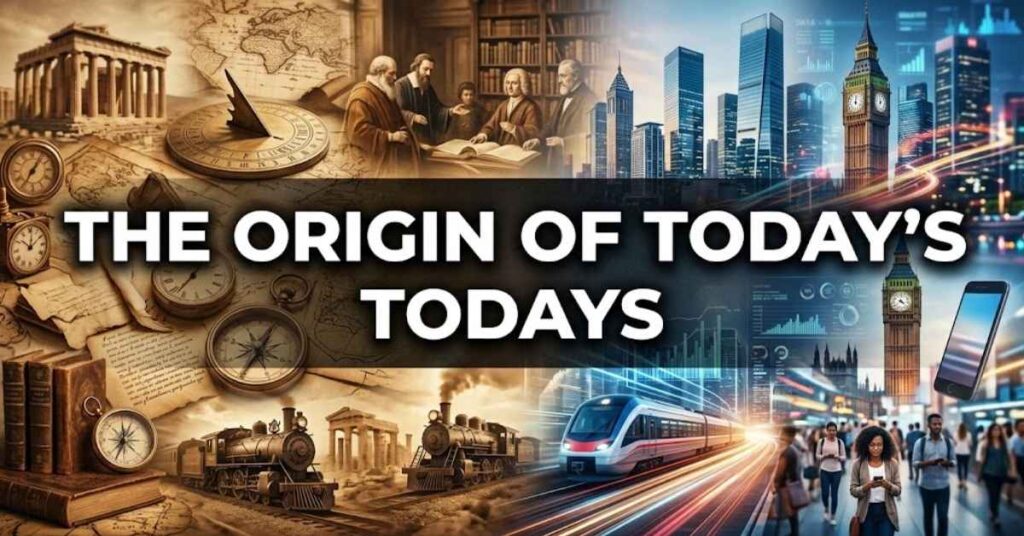
The word started life in Old English as “to dæge,” meaning “on this day.” Over the centuries, those two pieces merged into one.
For a long time, writers even hyphenated it as “to-day.” British writers kept that habit well into the early 1900s. Then the hyphen faded, and today became the clean word we use now.
The apostrophe has its own backstory. It started as a stand-in for a lost letter in old possessive endings. Eventually it became the standard marker for the possessive apostrophe we all learn in school.
British English vs. American English Spelling
Here’s some good news. British English and American English agree on this one.
Both write today’s with an apostrophe. Style guides on both sides of the Atlantic treat it the same way.
So if you’ve heard “it’s just a UK thing,” relax. The real differences between the two show up in words like “colour” and “organise,” not in this apostrophe rule.
Key Rule: When to Use Today’s vs. Todays

The grammar rule is short. Singular nouns show ownership by adding an apostrophe and an s.
Today is singular. So its singular possessive is today’s.
Todays without the apostrophe would be a plural. That’s rarely what you mean, and we’ll cover the exception later.
The One Rule You Need to Know
Try this swap test. Replace the word with “of today” and see if the sentence still works.
“Today’s meeting” becomes “the meeting of today.” It works, so the apostrophe belongs.
If the swap sounds right, write today’s. If you’re simply saying when something happens, write today with no extras.
Comparison Table: Today’s or Todays Meeting
| Phrase | Correct? | Why |
| Today’s meeting | Yes | Possessive form, the meeting belongs to today |
| Todays meeting | No | Missing apostrophe |
| Todays’ meeting | No | Apostrophe sits in the wrong place |
| Today meeting | No | Needs the possessive to link the two nouns |
| Today’s a busy day | Yes | Contraction of “today is” |
Todays Date vs. Today’s Date
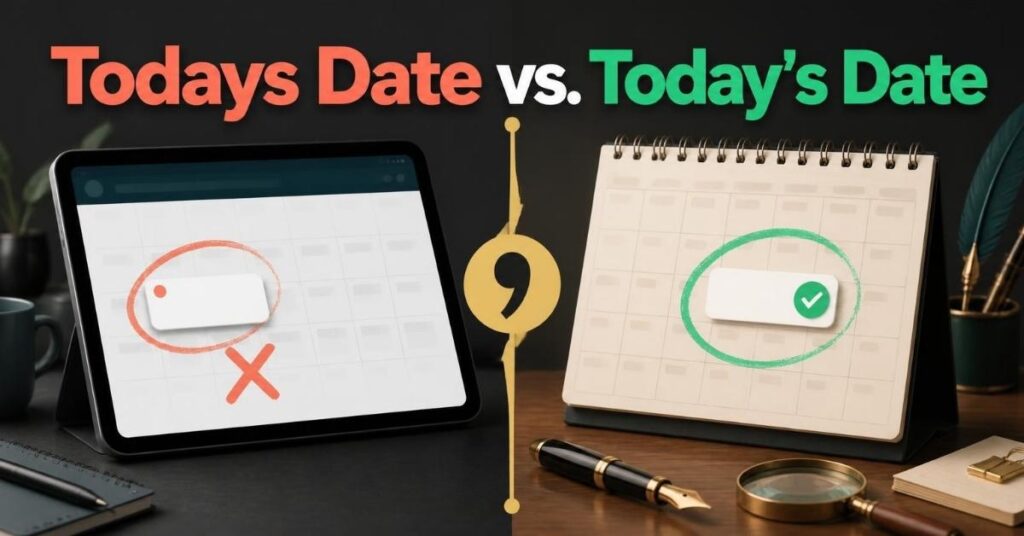
“Today’s date” is the correct phrase. “Todays date” is the same spelling mistake you’d find in “todays meeting.”
A friend of mine once filled out a school form. The label said “Todays Date” in bold print. She didn’t write it, but she did wince.
Printed forms get this wrong more often than you’d expect. If you’re designing one, use “Today’s Date” and move on.
Which Spelling Should You Use?
Use today’s in emails, essays, reports, and social posts. It’s the correct English spelling everywhere.
There are two small exceptions. Web addresses and hashtags can’t hold apostrophes, so you’ll see forms like “todaysnews” in domains and tags. That’s a technical limit, not a grammar choice.
Search engines also ignore punctuation. That’s why people type “todays weather” into Google and still get good results. Your search habits don’t have to become your writing habits.
Common Mistakes with Todays / Today’s
Most grammar mistakes here fall into four buckets. Spot them once and you’ll catch them everywhere.
Mistake 1: Dropping the apostrophe before a noun
This is the big one. “Todays schedule” and “todays homework” both lose the apostrophe.
The fix takes one second. Write “today’s schedule” and “today’s homework.”
Mistake 2: Placing the apostrophe after the “s” (todays’)
Some writers know an apostrophe is needed but put it in the wrong spot. “Todays’ lesson” looks fancy, and it’s wrong.
An apostrophe after the s signals a plural owner, like “the teachers’ lounge.” Today is singular, so the apostrophe goes before the s.
Mistake 3: Treating “today” like an adjective without an apostrophe
“Today meeting” sounds almost right when you say it fast. However, today isn’t an adjective.
It’s a noun acting as a possessive modifier. That’s why it needs the apostrophe to connect to the next word.
Mistake 4: Confusing the adverb form with the possessive form
“I’ll finish the report today’s” is wrong. So is “Today’s I’m going to the gym.”
When you mean on this day, use plain today. When you mean belonging to today, use today’s.
Today’s / Today’s in Everyday Examples
Real sentences make the rule stick. Here are common ones you’ve probably typed already:
- Today’s date goes at the top of the form.
- Today’s weather looks rainy with a chance of thunder.
- Today’s news is already buzzing on social media.
- Today’s schedule has three calls and a long lunch.
- Today’s agenda covers budgets and hiring.
- Today’s homework is due by Friday.
- Today’s lesson is about fractions.
- Today’s headlines all focus on the election.
- Today’s deadline is 5 p.m. sharp.
- Today’s report shows sales are up.
- Today’s events include a parade and fireworks.
- Today’s technology fits in your pocket.
- Today’s youth care a lot about climate.
- Today’s newspaper landed on the porch early.
- Today’s game kicks off at seven.
- Today’s forecast calls for light wind.
Spot the pattern. Every one of them uses today’s as a possessive modifier before a noun.
Good sentence examples also help in academic writing. “Today’s research suggests sleep affects memory” reads cleanly and correctly.
Todays or Today’s – Google Trends & Usage Data
I can’t pull live numbers for you here. But you can check the pattern yourself in about a minute.
Open Google Trends and compare “todays” with “today’s.” You’ll likely see both spellings searched often, since search engines ignore punctuation.
For a deeper check, try the Corpus of Contemporary American English (COCA) or the British National Corpus (BNC). Published writing in both overwhelmingly uses today’s. That gap between how people search and how people publish says a lot.
Keyword Comparison Table
| Phrase | Standard spelling | Quick note |
| Today’s date | Correct | Use on forms and emails |
| Todays date | Incorrect | Missing apostrophe |
| Today’s weather | Correct | Common in headlines |
| Todays weather | Incorrect | Fine in a search box only |
| Today’s news | Correct | Standard in publishing |
| Todays news | Incorrect | Fine in domain names only |
When Today’s Means “Today Is”
There’s a second job for today’s. It can be a contraction of today is.
“Today’s Friday” means “Today is Friday.” “Today’s going to be great” means “Today is going to be great.”
This use is common in speech and casual writing. In professional writing, many people prefer spelling it out. Either way, the spelling stays the same.
Is “Todays” Ever Correct?
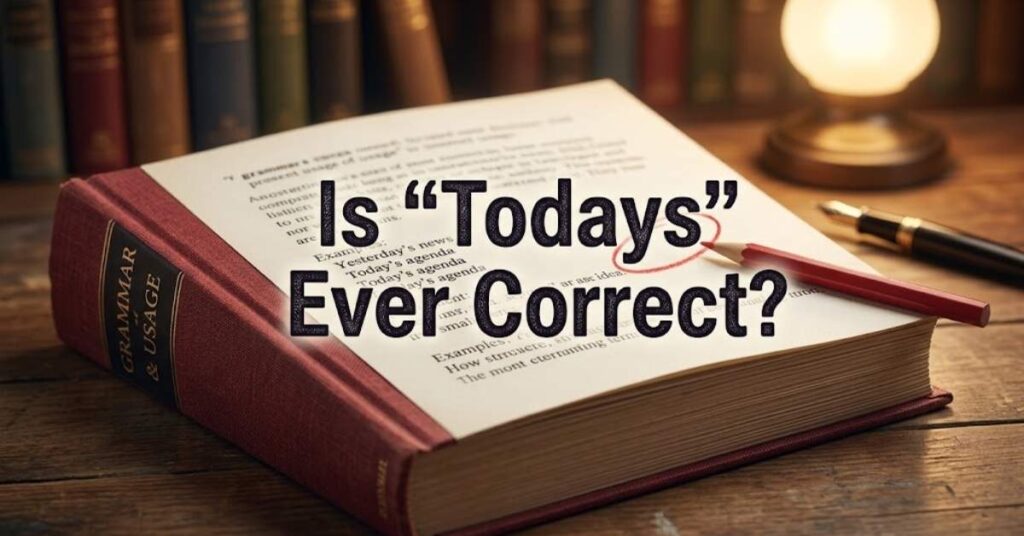
Almost never, but there’s a rare exception. Todays can work as a plural form of today.
You’ll see it in poetic or playful writing. Think of a line about “all our yesterdays and todays.”
That’s a literary plural, and it’s uncommon. If you’re writing an email or a school paper, skip it.
Do Grammar Checkers Catch It?
Tools like Grammarly, Microsoft Editor, and ProWritingAid usually flag a missing apostrophe. They’re a helpful grammar checker for quick drafts.
But they can miss it in headlines, all-caps text, and buttons. They also can’t judge your intent in odd sentences.
So treat these grammar correction tools as a second pair of eyes. Your own proofread still matters.
Easy Ways to Remember the Difference
Here are three tricks that actually work. Pick the one that sticks.
- The swap test: If “of today” fits, add the apostrophe.
- The Sarah test: If “Sarah’s meeting” works, “today’s meeting” works too.
- The plural test: If you aren’t talking about many todays, you don’t need a bare “todays.”
Say it out loud once or twice. It’ll feel natural within a week.
Frequently Asked Questions
Is “todays” a real word?
Not in standard English. Todays shows up only as a rare plural form of today in literary writing.
For everyday use, treat it as a spelling mistake. Write today’s instead.
Why does today’s need an apostrophe?
Because it’s a possessive. The apostrophe shows that something belongs to or connects with today.
It’s the same logic as “the dog’s bowl.” Apostrophe in today’s works exactly like that.
Is it “today’s date” or “todays date”?
It’s today’s date. The apostrophe is required because the date belongs to today.
“Todays date” is a spelling mistake that slips into forms and emails. Fix it once and it won’t come back.
Can I use “todays” without an apostrophe in a sentence?
Only as a rare plural, and even then it looks odd. In normal writing, don’t.
If you’re typing a search query, it’s fine. If you’re writing for a reader, add the apostrophe.
Is “today’s” used the same way in British and American English?
Yes. Both varieties use today’s for the possessive and the contraction.
The old hyphenated “to-day” is gone from modern writing. You won’t need it in either country.
What is the difference between “today” and “today’s”?
Today names the present day or tells when something happens. Today’s shows possession or acts as a contraction of “today is.”
“I’m free today” uses the first. “Today’s plan is simple” uses the second.
Is “todays'” (with apostrophe after s) ever correct?
No. That form implies a plural possessive, which doesn’t fit this word.
The apostrophe goes before the s. Today’s is the only correct form.
What does “today’s” mean when used as a contraction?
It means “today is.” “Today’s my birthday” is the same as “Today is my birthday.”
You’ll hear this daily in casual talk. In professional writing, you can spell it out if you want a more formal tone.
Conclusion
In conclusion, Todays or Today’s is a common spelling question in English. The correct form is usually today’s with an apostrophe. It shows that something belongs to or relates to today. For example, you can write “today’s news” or “today’s lesson.” The word “todays” without an apostrophe is generally incorrect in standard English. Remembering this simple rule can help you avoid spelling mistakes.
When choosing between Todays or Today’s, always check the meaning of your sentence. If you are talking about something related to the current day, use “today’s.” This small punctuation mark makes your writing clear and correct. Keep practicing with simple examples. Soon, you will remember the difference without any confusion. Understanding Todays or Today’s will help you write better sentences and improve your everyday English.

James Carter is an English grammar writer and contributor at GoldenMegazine.com, where he shares clear, practical, and easy-to-understand guidance on grammar, vocabulary, sentence structure, and everyday English usage. His goal is to make complex language concepts simpler for students, writers, and English learners while helping readers communicate more confidently and effectively.
